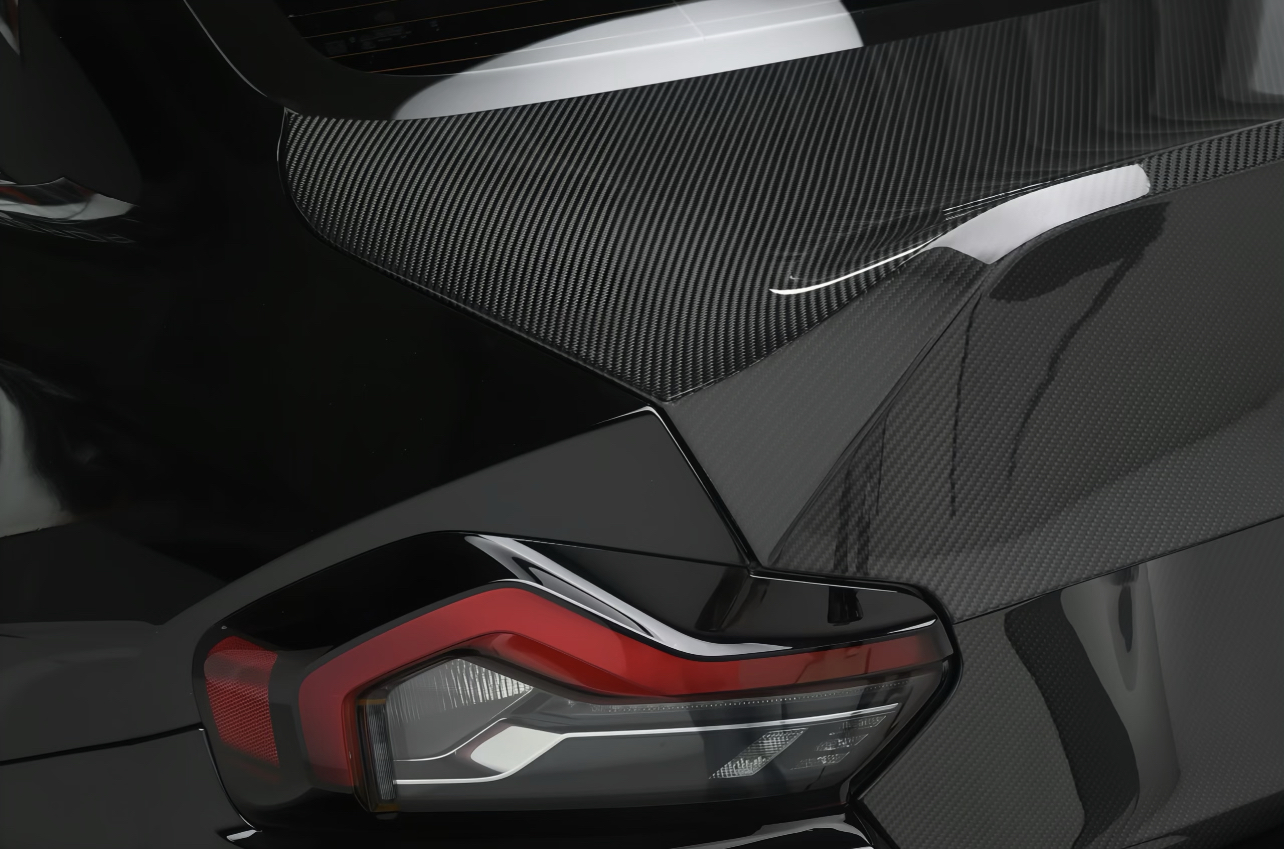
Owners of BMW M3, M4, and M5 models who spend a fortune upgrading their cars with carbon fiber front splitters, rear wings, and mirror covers often find that these parts begin to dull, yellow, and develop spiral patterns before long—the problem usually lies not in product quality, but in maintenance practices.
Carbon fiber parts are coated with a layer of UV-resistant clear coat, which serves as the sole protective barrier between the woven layers and the epoxy resin. Proper maintenance boils down to three key steps: gentle cleaning, consistent protection, and avoiding UV exposure and chemical corrosion. Below is a comprehensive, step-by-step guide for M Power owners to follow.
I. Why Do Carbon Fiber Parts Require Special Care?
Carbon fiber parts consist of three layers: a weaved carbon fiber layer that provides strength, an epoxy resin matrix that binds the fibers, and an outer clear coat layer that protects against air, UV rays, and chemical contaminants.
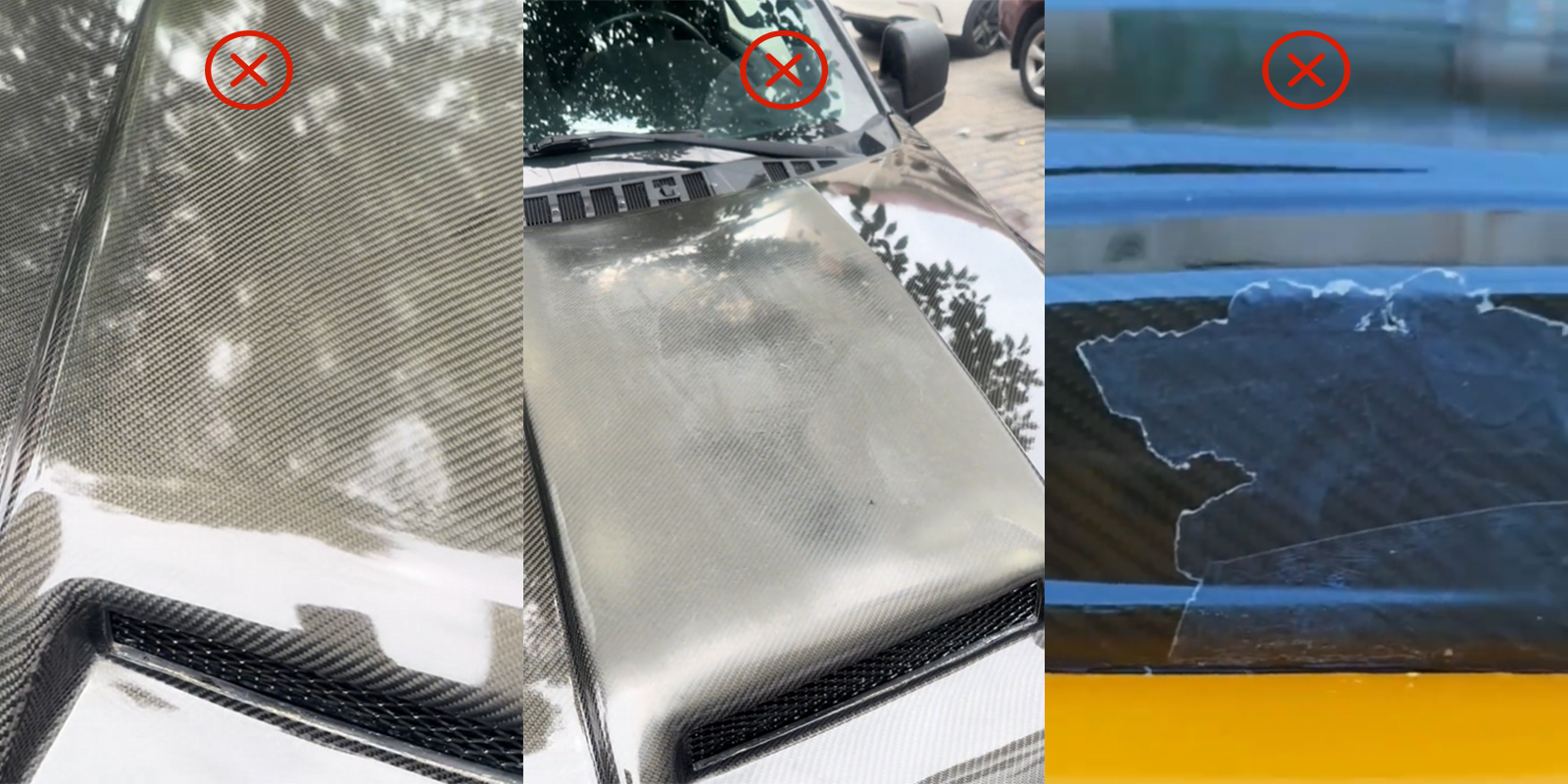
If proper maintenance is lacking, three typical problems will arise:Yellowing—UV rays cause the epoxy resin to degrade; this usually begins to appear after 1–2 years, or sooner in areas with strong sunlight; Loss of gloss—Acidic contaminants such as brake dust, insect residue, and road salt accumulate over time, etching the clear coat surface; Swirl marks—Improper cleaning methods leave countless micro-scratches on the clear coat, causing the mirror-like finish to become dull.
II. Proper Cleaning: Tools and Steps
| ✅ Recommended | ❌ Absolutely Do Not Use |
| pH-Neutral Car Wash Liquid (pH 6.5–7.5) | Dishwashing Detergent (degreases, removes protective coatings) |
| Microfiber Car Wash Gloves (300 GSM or higher) | Coarse sponges, old towels |
| Double-Bucket Car Wash Method (Two Buckets + Gravel Barrier) | Single-Tank Direct Washing |
| Low-Pressure Water Gun / Gentle Water Flow | Directly spray the edge seams with a high-pressure water jet |
| Plush Microfiber Car Towel (For Drying) | Wipe away dust with a dry cloth (this will definitely leave spiral marks) |
| Ceramic Maintenance Spray / Quick Detail Spray | Ammonia-Containing Glass Cleaner (Epoxy-Degrading) |
Seven-Step Cleaning Process:
1. Rinse before washing: Use a low-pressure water stream to rinse away loose dust and grit. Never wipe the surface directly with your hands—dry particles act like sandpaper.
2. Prepare double buckets: Fill one bucket with pH-neutral car wash solution and the other with clean water. Rinse your gloves thoroughly in the clean water bucket before dipping them into the car wash solution.
3. Wipe in Straight Lines: Gently wipe in straight lines with a microfiber glove; do not use circular motions. Micro-scratches caused by circular movements will accumulate and create a hazy finish.
4. Soften Stubborn Stains: For bug residue and bird droppings, apply a damp towel for a few minutes to soften them; do not scrub vigorously.
5. Rinse: Thoroughly rinse off any remaining detergent with clean water.
6. Pat Dry Immediately: Use a clean microfiber towel to pat the surface dry—do not rub it dry. Water spots left to dry in direct sunlight can form etching marks that penetrate the clear coat.
7. Work in the Shade: Avoid washing the car in direct sunlight; if the water evaporates too quickly, water spots will form.
(Special Reminder for M Power Owners:The front bumper and the lower edges of the side skirts get the dirtiest; use a separate glove for these areas to avoid transferring grit to other parts of the car. Gently wipe carbon fiber interior trim with a slightly damp cloth; do not spray liquid directly into the crevices. When using an automatic car wash, choose only contactless models—brush-type washers are essentially sanding down your clear coat with sandpaper.)
III. Protection Options: Wax, Body Sealant, or Ceramic Coating?
| Solution | Protection Duration | UV Protection | Water-repellent | Construction Difficulty |
| Palm wax / Synthetic wax | 1–3 months | Generally | Good | Simple |
| Body sealant | 3–6 months | Fair | Good | Average |
| Ceramic Coating (SiO₂) | 1–5 years | Excellent | Outstanding | Professional installation recommended |
Ceramic coatings are the gold standard for carbon fiber parts. Rather than simply forming a surface layer, they chemically bond with the clear coat, providing 9H hardness to resist micro-scratches, strong hydrophobic properties that prevent dirt from adhering, and excellent UV protection. We recommend brands such as Gtechniq, CarPro, and Gyeon, some of which offer formulations specifically designed for carbon fiber.
(Note: Regular palm wax is not suitable for carbon fiber parts. Palm wax increases static electricity on the surface, causing it to attract more dust particles and resulting in scratches when wiped.)
IV. Preventing UV-Induced Yellowing: The Most Important Consideration
Ultraviolet (UV) rays are the number one enemy of carbon fiber parts. The preventive measures are clear: park in an underground garage or a shaded area whenever possible; use a breathable car cover when parking outdoors for extended periods; apply PPF (Paint Protection Film) to areas prone to stone chips, such as the leading edge of the front lip, to protect against both stone chips and UV rays; and visually inspect the gloss every six months, addressing any dullness promptly.
If yellowing has already started, mild cases can be restored through professional polishing and reapplication of a ceramic coating; moderate yellowing requires wet sanding (2,000–3,000 grit) followed by reapplication of UV-resistant clear coat; severe yellowing caused by resin degradation cannot be repaired and requires replacement of the part. The cost of addressing yellowing in its early stages is far lower than that of repainting later on, so don’t wait.
V. Repair of Common Damage
-Spiral marks / fine scratches: Can be removed using a DA polisher + fine-grit polishing compound + finishing pad.
-Stone chips causing paint damage: Most common on the leading edge of the front lip. After cleaning, touch up with a clear coat pen; for large areas, we recommend repainting.
-Water spot etching: For mild cases, use a specialized water spot remover; for severe cases, polishing is required.
-Delamination at the edges: This is often caused by direct high-pressure water jet exposure to the seams. Professional repair is required; do not attempt to peel it off yourself.
VI. FAQ
1. Can carbon fiber parts be washed with dish soap? --No. Dish soap has strong degreasing properties that can strip away the protective layer and accelerate the aging of the clear coat.
2. Do carbon fiber parts need to be waxed? --Regular palm wax is not recommended; ceramic coatings or specialized carbon fiber sealants are preferred.
3. Can yellowing in carbon fiber be restored? --Mild yellowing can be restored through polishing, but severe yellowing caused by resin degradation cannot be repaired and requires replacement.
4. Is the maintenance process the same for matte carbon fiber? --The cleaning process is the same, but matte parts cannot be polished; a matte-specific ceramic coating must be used, otherwise they will become glossy.
5. Should a coating be applied immediately after installing new carbon fiber parts? --It is recommended to wait 1–2 weeks to allow the clear coat to fully cure before applying the coating for optimal results.
The three core principles for maintaining M Power carbon fiber parts are: gentle cleaning, ongoing protection, and avoiding UV exposure. Beginners can start with a pH-neutral cleaning solution, the two-bucket method, and a ceramic maintenance spray; owners planning to keep their vehicles long-term should opt for a professional ceramic coating right from the start and perform maintenance every six months, which will help the carbon fiber parts retain their new-car-like shine and texture for years to come.